Sweet pea — a study of May's defining flower on the Huntington Beach coast
Of every stem May puts on a Huntington Beach table, none earns its keep like the sweet pea. A short, honest study of the local season, the scent that disappears by lunch, and how to make a fragile bunch last a week.
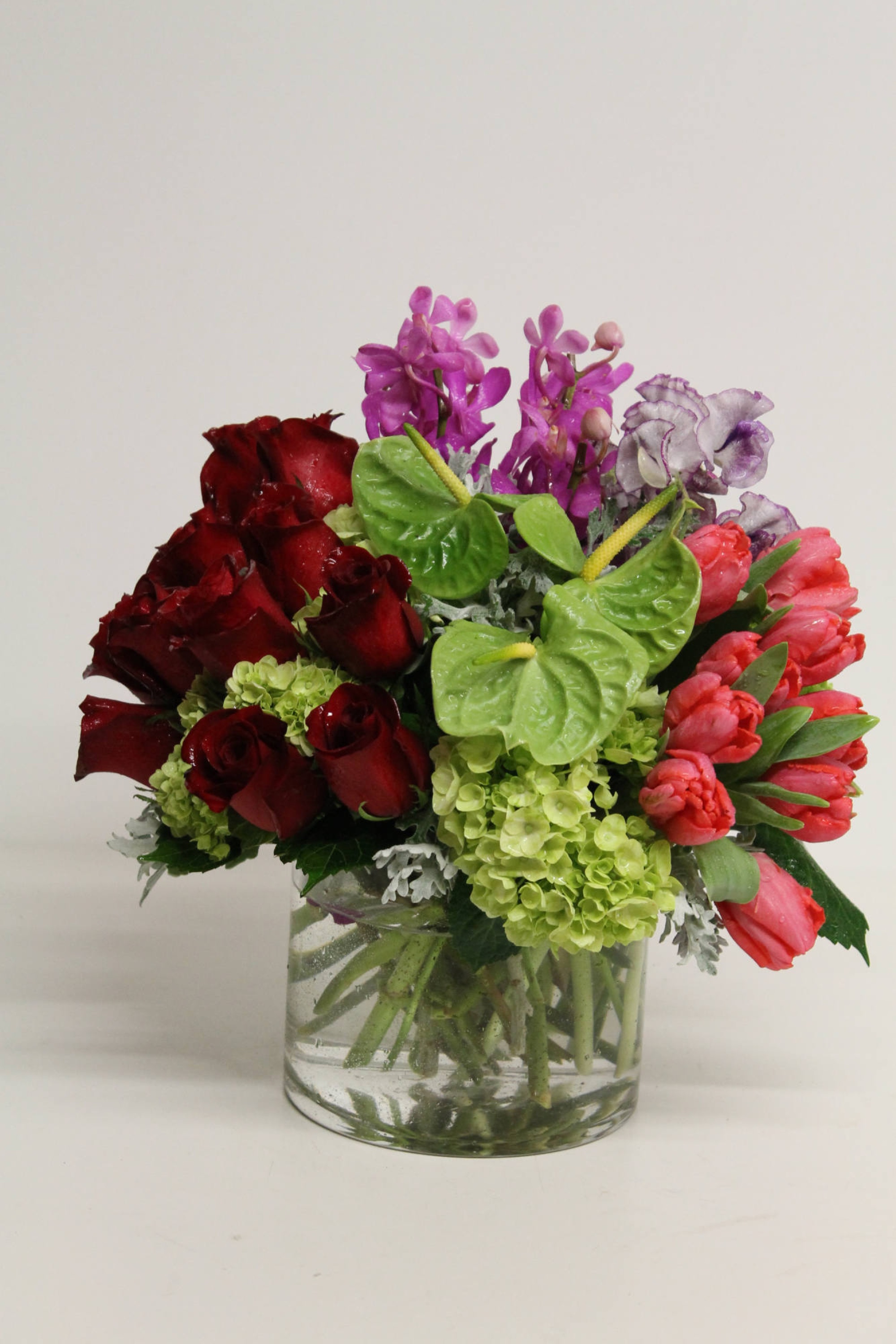
Ask the studio what flower defines May on the Orange County coast and you will not hear "peony." You will hear "sweet pea." The peony is the showpiece — the flower customers ask for by name. The sweet pea is the flower the designers fight over when a small bunch arrives at the back door, smelling like a garden that has been left alone for a hundred years.
May is its month. Six weeks of real season — a few in late April if the coastal nights stay mild, then four weeks of glory, then the heat shuts it down. Miss that window and the next chance is twelve months away. This is a short note on what the flower is, why it matters here, and how to make a bunch behave once it is on your kitchen counter.
Why May belongs to the sweet pea here
Sweet pea — Lathyrus odoratus — wants two things: cool nights and slow mornings. Both are exactly what the Huntington Beach coastline gives in May. Marine layer most mornings, sixty-degree dawns, no afternoon heat dome yet. The stems grow long, the buds set heavily, and the perfume gets concentrated in a way greenhouse flowers never quite manage.
By June the inland temperatures spike, the marine layer burns off by 9 a.m., and the same plants throw shorter stems and smaller blooms. By early July most local growers have already pulled the vines and rotated the beds. A real OC sweet pea is a thirty-day flower, and the thirty days are mostly May.
Where the stems come from
Almost every sweet pea you will see in a Huntington Beach studio in May has come from one of three places: a Carpinteria grower two hours up the coast, a Carlsbad farm an hour south, or — on a lucky day — a small backyard plot in Garden Grove or Costa Mesa whose owner sells to two or three florists by phone. The Carpinteria stems are the longest; the Carlsbad ones the most fragrant; the OC backyards the rarest and the most unpredictable.
Imported sweet peas exist. Holland flies them in twelve months a year. They look correct in the cooler and they have almost no scent. If a sweet pea does not perfume the room from across the table, it has flown.
The scent — and why it disappears
The single hardest thing about sweet peas is that their perfume is fugitive. Cut at dawn, packed cold, hand-delivered to the studio by 9 a.m., a bunch will scent an entire room. The same bunch at 2 p.m. is half as fragrant. By the next morning the scent has dropped to a soft whisper that returns each time you press your nose into the petals.
This is not a defect — it is the molecule. The volatile compounds responsible for the sweet pea's smell evaporate at room temperature within hours of cutting. The studio mitigates by keeping the stems cold until the last possible moment, composing arrangements with sweet peas last, and delivering same-day. If you order sweet peas for a dinner party, ask for delivery within two hours of the meal. They earn their place in that window.
How to keep a bunch alive past day three
Sweet peas are short-lived even by floral standards. A bunch will give you five honest days, six if you are attentive, three if you neglect them. The drill is unglamorous and unbreakable:
- Recut the stems at a sharp angle the moment they arrive, under cold running water.
- Use a deep, narrow vase — sweet pea stems are floppy and want support. The water should reach two-thirds up the stem.
- Skip the floral preservative on day one. Sweet peas drink so quickly that the sugar in preservative can foul the water before the stems have settled. Plain cool water, changed daily.
- Keep the vase out of direct sun and away from the fruit bowl. Sweet peas are unusually sensitive to ethylene; a bowl of bananas across the kitchen will shorten the bunch by two days.
- Refrigerate overnight if you can — a top shelf clear of fruit and meat, eight to ten hours. A bunch chilled at night holds its colour and posture noticeably better than one left on the counter.
Composing with them
Sweet peas resist formal arrangement. Their stems curl, the tendrils want to grab whatever is next to them, and the blooms face every direction at once. Lean into the disorder. A wide low ceramic bowl, a hand-tied bunch with the rubber band cut at the last second, the stems splayed loose so each bloom can find its own light. Nothing else in the vase, or one quiet anchor — a few stems of soft green like dill or scented geranium leaf. Anything bigger steals the perfume.
For weddings in May we use them in bouquets and ceremony aisle vessels rather than centerpieces — centerpiece arrangements sit on tables for six hours and the scent is gone after one. A bridal bouquet held close to the body for thirty minutes is the right job for a sweet pea. So is a small posy at each place setting that the guests can lift to their faces.
When the season ends
The Carpinteria growers usually call the studio at the end of the first week of June and say "two more weeks." That is the gentle warning. By mid-June the stems are shorter, the blooms smaller, and the heat has caught up to the plants. We take the last bunches gladly and then we wait.
Eleven months is a long time to want a flower. That is also why, when a bunch lands on the studio bench in the second week of May, three designers stop what they are doing and walk over.
Frequently asked
When are sweet peas in season in Orange County?
Late April through the first week of June, with peak supply in the three middle weeks of May. The local season is short — roughly thirty days of real abundance — and once daytime temperatures climb past the mid-seventies inland, the local growers pull the vines until the following spring.
How long do sweet peas last in a vase?
Five days reliably, six with attentive care, three if neglected. Recut and rewater daily, keep them cold overnight, and keep ethylene-producing fruit out of the room.
Why don't the sweet peas at my supermarket smell?
They were almost certainly flown in from Holland. The volatile compounds that give sweet peas their scent evaporate within hours of cutting. A locally grown stem cut at dawn and delivered same-day perfumes the room; a flown stem two days off the plane does not.
Can I order sweet pea arrangements year-round?
Honestly, no — not from us. We only put sweet peas in the catalogue when the local growers are cutting. If you call in December and ask for sweet peas, we will explain why we would rather build you something seasonal than fly stems in that have lost what makes the flower worth ordering.